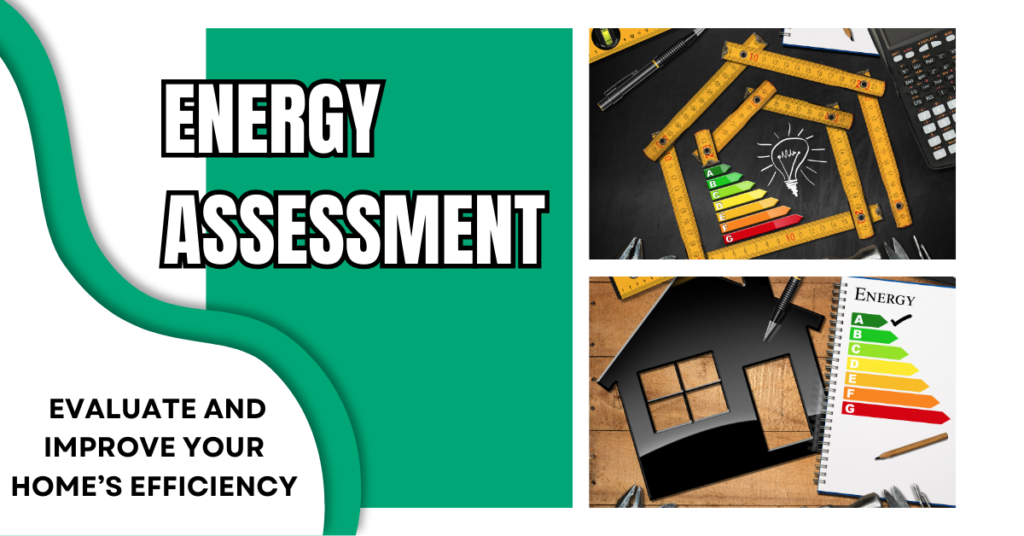
Determine the Health of Your Building with Our Energy Assessment Services! Let our experts evaluate how energy-efficient your building is and help you save money while reducing your carbon footprint.
Is Your Home Wasting Energy?
Does your home feel unusually cold despite having the heating on full blast? Are your energy bills higher than expected? If so, you’re not alone. Thousands of UK homes suffer from hidden energy inefficiencies, leading to unnecessary energy waste and increased costs.
The good news? Reliant Energy Solutions offers FREE ECO4 Grant-funded energy assessments, helping homeowners detect energy inefficiencies and access valuable government funding for improvements.
Why Choose Reliant Energy Solutions Energy Assessment?
Reducing Carbon Emissions with ECO4
The ECO4 scheme is designed to reduce carbon emissions and improve home energy efficiency. By identifying problem areas in your home, we ensure you qualify for necessary improvements under this government-backed initiative.
Key Benefits of an Energy Assessment
✅ Save Money: Discover practical ways to reduce your energy bills, often saving hundreds of pounds yearly.
✅ Boost Comfort: Say goodbye to cold spots and uneven temperatures; enjoy a warm and cozy home.
Lower Carbon Footprint: Use less energy and reduce your home’s environmental impact.
Access ECO4 Grants: Ensure eligibility for government funding to cover energy-efficient upgrades.
Types of Energy Assessments
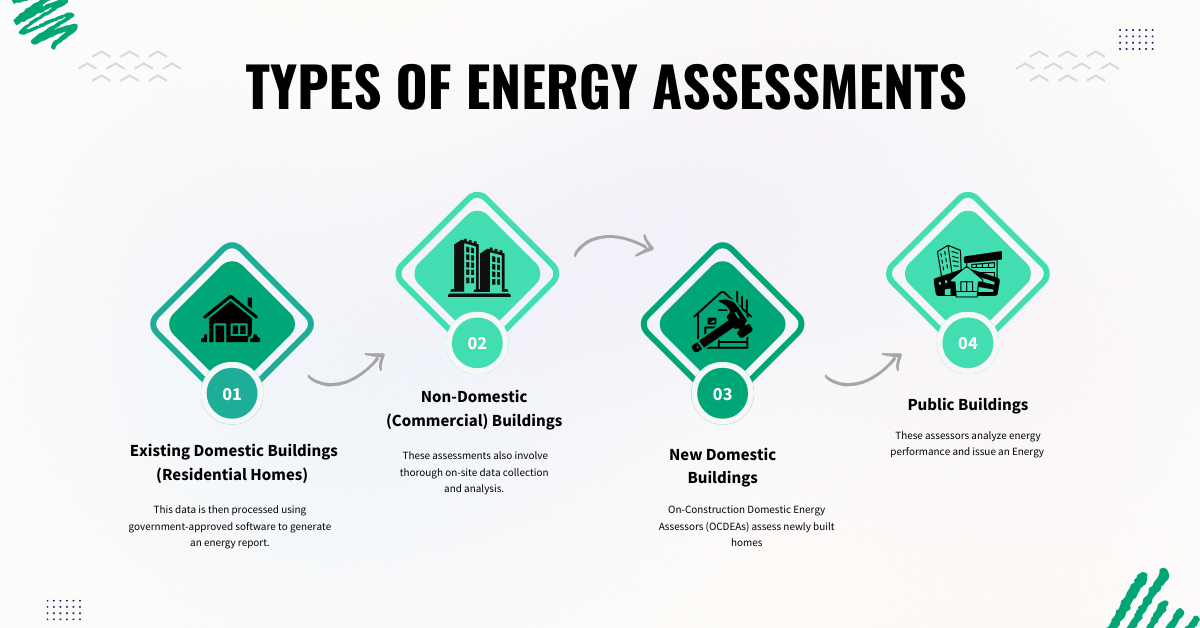
Energy assessments vary based on the type of building being evaluated. Different specialists conduct assessments tailored to specific property types.
1. Existing Domestic Buildings (Residential Homes)
Domestic Energy Assessors (DEAs) evaluate houses, flats, and bungalows, collecting data on-site. This data is then processed using government-approved software to generate an energy report.
2. Non-Domestic (Commercial) Buildings
Non-Domestic Energy Assessors (NDEAs) conduct assessments for offices, retail shops, and other commercial buildings. These assessments also involve thorough on-site data collection and analysis.
3. New Domestic Buildings
On-Construction Domestic Energy Assessors (OCDEAs) assess newly built homes. Their calculations are required before and after construction using building plans and elevation drawings.
4. Public Buildings
Display Energy Certificate (DEC) Assessors evaluate public buildings such as libraries, schools, and churches. These assessors analyze energy performance and issue an Energy Performance Certificate (EPC) after assessment.
What is an Energy Performance Certificate (EPC)?
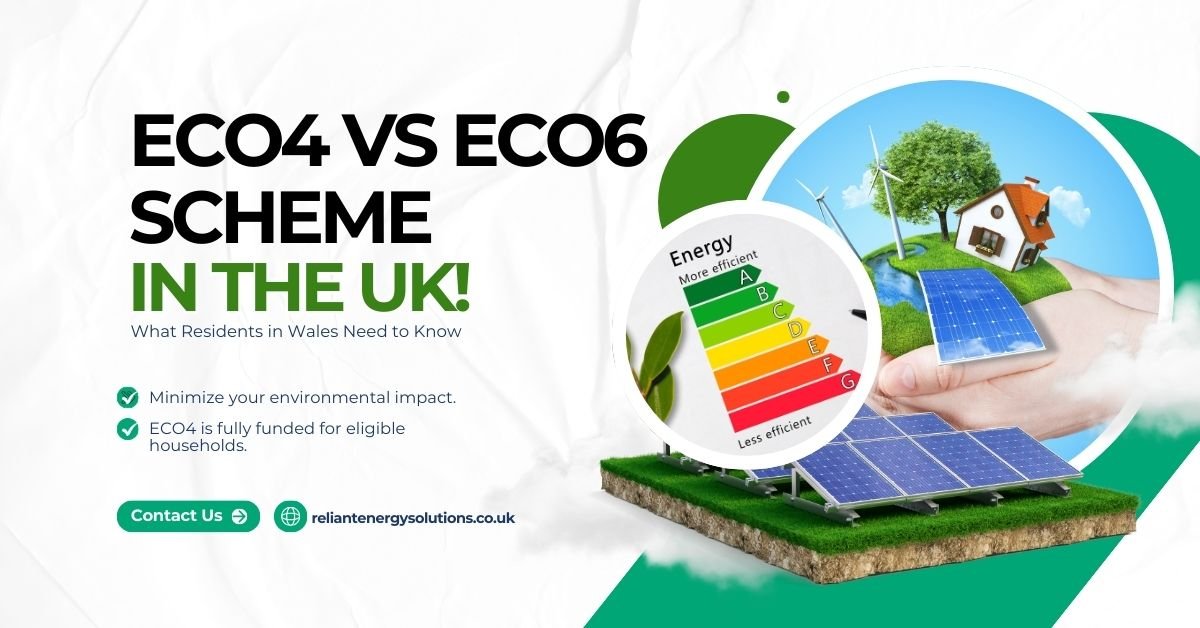
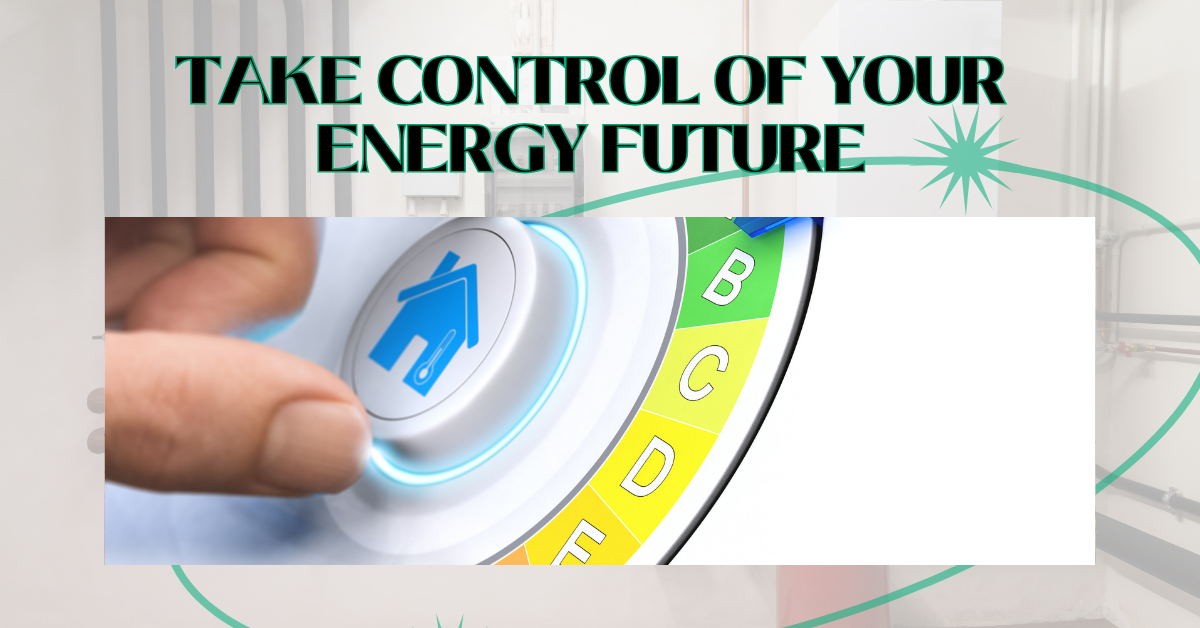
An Energy Performance Certificate (EPC) is a legal document that rates a building’s energy efficiency on a scale from A (most efficient) to G (least efficient). It is mandatory for all properties being sold or rented in the UK. The EPC provides insight into energy consumption and suggests improvements for better efficiency.
How is an EPC Calculated?
The EPC rating is determined using the Standard Assessment Procedure (SAP), a government-approved methodology. It considers:
- Building Construction: Walls, roof, floors, windows, insulation.
- Heating & Hot Water Systems: Type, efficiency, fuel used, controls.
- Lighting: Type and energy efficiency.
- Ventilation: System type and efficiency.
- Renewable Energy Sources: Solar panels, heat pumps, etc.
- Geographic Location: Exposure to wind and sunlight.
Steps in EPC Calculation:
- Data Collection:
- On-site inspection by an accredited energy assessor.
- Reviewing building plans and existing documentation.
- Measurements and questionnaires.
- Rating Calculation:
- The data is input into SAP software.
- The system generates an energy efficiency rating (A-G).
- Recommendations for improving efficiency are provided.
- EPC Issuance:
- The EPC is published on the government register within 24-48 hours.
- The certificate is emailed directly to the homeowner.
- EPCs are valid for 15 years in the UK.
Why is an EPC Important?
- Encourages Energy Efficiency Awareness – Provides homeowners with valuable insights into energy usage.
- Essential for Buyers and Tenants – Helps them make informed decisions when purchasing or renting a property.
- Reduces Energy Bills – Guides homeowners to cost-effective energy improvements.
- Increases Property Value – Energy-efficient homes are more attractive to buyers.
- Supports Environmental Goals – Helps reduce carbon emissions and meet UK energy efficiency targets.
Factors Affecting EPC Rating:
✔️ Building Type: Detached homes are typically less efficient than terraced houses.
✔️ Size: Larger buildings consume more energy.
Insulation: Better insulation improves efficiency.
Heating System: The type and efficiency of heating systems impact energy use.
Windows & Doors: Double glazing improves heat retention.
Benefits of Having an EPC
🏡 Awareness: Understand how much energy you use and waste.
💰 Cost Savings: Implement recommended changes to cut down energy expenses.
🔥 Comfort: Improve your home’s temperature regulation.
📈 Property Value: A higher EPC rating makes your home more desirable.
🌍 Eco-Friendly: Reduce your home’s environmental impact.
If you plan to sell or rent your property, obtaining an EPC is a legal requirement.
FAQs: Your EPC Questions Answered
Q: Who checks my home’s energy efficiency?
A: Certified Energy Assessors conduct home energy efficiency checks.
Q: How do assessors inspect my home?
A: They conduct on-site inspections, take measurements, and review relevant documents.
Q: What do I get after the assessment?
A: You receive a detailed EPC certificate outlining your home’s energy rating and improvement recommendations.
Q: How long is my EPC valid?
A: EPCs are valid for 15 years from the issue date.
Take Control of Your Energy Future – Schedule Your Assessment Today!
Ready to take the first step toward a more energy-efficient home?
✅ Find out if you qualify for the ECO4 Grant.
✅ Get a FREE energy assessment from us.
Start saving money while reducing your carbon footprint.
📞 Contact Prisma Energy Solutions today to schedule your assessment and unlock the benefits of an energy-efficient home!